







Snow report for Almenwelt Lofer
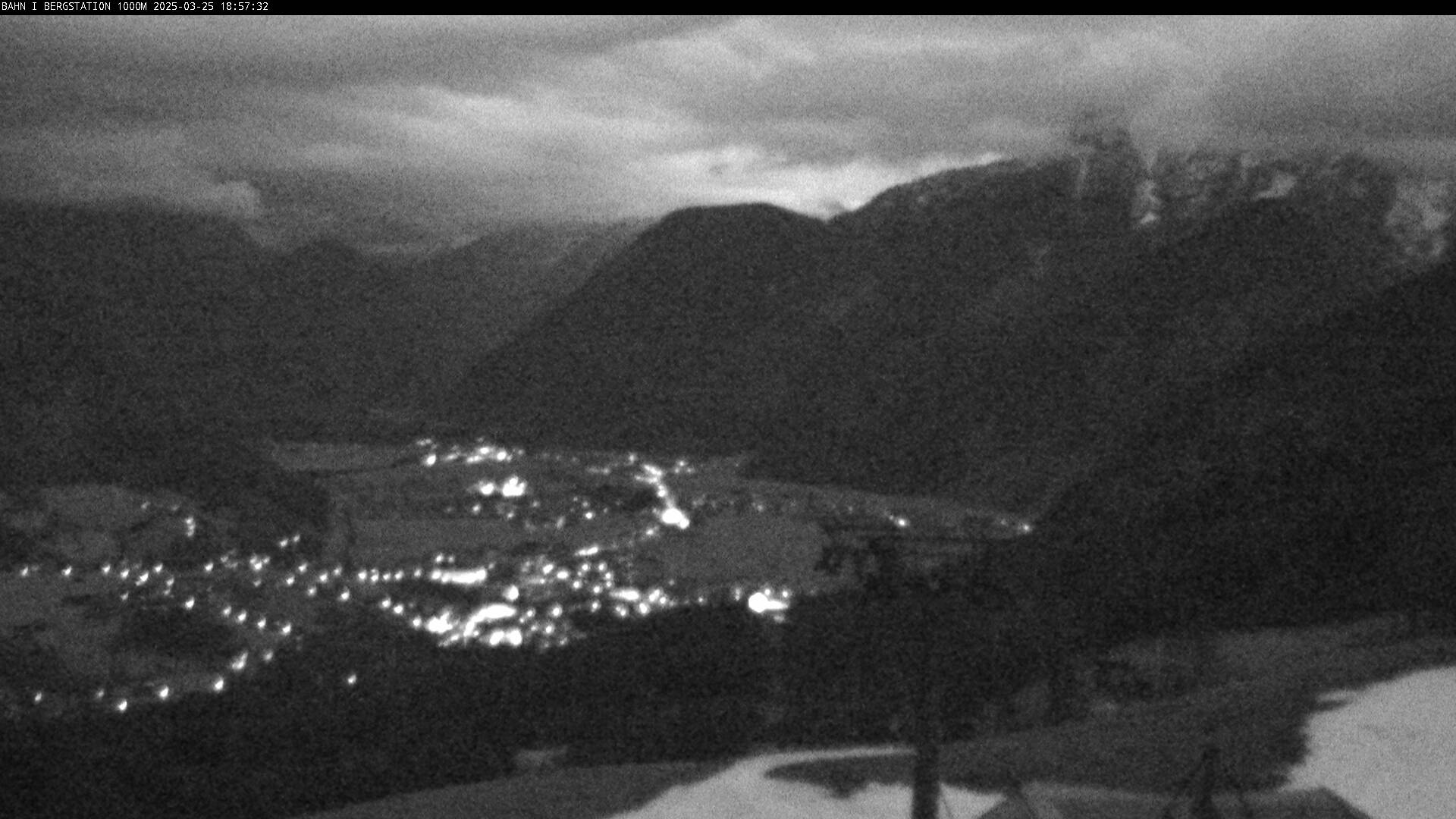
Lofer is located in the Salzburg region, in the Austrian Alps, in the Saalach Valley between Tyrol and Bavaria. The village retains a historic center of grand buildings, cafés, and restaurants, with the Loferer Steinberge mountains in the background. From here, a cable car ascends to the Almenwelt Lofer, the ski area named after the alpine pastures above the town. pastures is in fact the German word for them. The lifts’ departure from the center allows you to choose a stay in the village without giving up direct access to the mountain.
Skiing is primarily about blue runs, schools, and families looking for slopes to gain confidence on or ski together. The red and black variants add options for more experienced skiers, but they aren’t the majority: the reason to choose Lofer is more about a vacation where days on the slopes blend with village life and snow activities accessible even without skiing. At high altitude, there’s a prepared walking trail and a cross-country ski loop; in the valley, horse-drawn sleigh rides and walks along the Saalach offer other ways to explore the surrounding area.
Page sections
Skiing at the Almenwelt Lofer
The ski area extends from 640 to 1.750 meters and boasts 46 kilometers of slopes: 32 km of blue slopes, 12 km of red slopes, and 2 km of black slopes. The prevalence of easy slopes provides a wide choice for those who want to gradually improve, without having to search for a challenging slope at every ascent. For families where some have been skiing for years and others are just starting out, areas that combine trails of varying difficulty are helpful.

Discover the best offers for a snow holiday in the best Alpine chalets and huts in the Dolomites, the best facilities immersed in the heart of the Dolomites with typical Alpine style.
The Grubhörndl slopes are a prime example: the Grubhörndl Familie, number 3, is blue, while the Grubhörndl Standard, number 2, is red. Even on the Schönbühel, the highest point reached by the SenderExpress chairlift, the blue Schönbühel Familie 7 slope is joined by the red Schönbühel Steilhang 6. In the Schwarzeck area, served by the eight-seater chairlift, the runs marked 15 also include blue and red variants.
Among the other blue runs is Märchenwald 9. Those seeking more challenging runs will find the black runs Postalm Standard 10 and Hochwena 12; Lärchgraben 11 includes red and blue variants. The return run to Lofer, marked 13, starts from the middle station and also includes red and blue runs. Route selection therefore matters, even on the final descent to the village, especially if you’re skiing with someone with little experience.
Cable cars, chairlifts and snowmaking
The ski lift network comprises 10 facilities: two gondola lifts, two eight-seater chairlifts, one six-seater chairlift, four surface lifts, and a moving walkway. The Almbahn I and Almbahn II gondola lifts have eight- and six-seater cabins, respectively. The former covers 370 meters of elevation gain over a 1.900-meter route; the latter climbs another 375 meters, over a length of 2.170 meters. The Almbahn II mountain station provides access to the pedestrian areas and the cross-country ski area.
Among the chairlifts, the SenderExpress has protective bubbles, heated seats, and child safety devices. It arrives at Schönbühel at 1.623 meters and serves north-facing slopes. At the mountain station of the Almen 8er Schwarzeck chairlift, at 1.565 meters, the panorama extends from the Kitzbüheler Horn to the Berchtesgaden mountains, the Leoganger and Loferer Steinberge, all the way to Lake Chiemsee and Salzburg in good visibility.
Artificial snow is available on 75% of the slopes, with over 70 snow guns. This system complements natural snow in a ski area that extends down to relatively low altitudes. For your return to the valley, it’s important to consult the daily bulletin, which lists the slopes actually open during your stay.
Children and adults who want to learn
The first descents have dedicated areas. The covered moving walkway at Almenwelt Lofer is 140 meters long and protects you from wind and bad weather during the ascent. An intermediate exit allows you to stop before the steepest final section, avoiding having to tackle the entire slope at once. Among the introductory skiing areas is the Loderbichl slope, number 14 on the map, classified as blue.
The Sturm ski school combines a ski school, rental, storage, and sports shop at the gondola base station. For those arriving without equipment or preferring to store it after lessons, the restrooms are located at the same access point as the ski lifts. Instructors speak German, English, Dutch, Czech, and Danish; please indicate your preferred language when booking.
For children aged 3 and up, the school offers a Kids’ Course, combining skiing, games, and entertainment. Lessons take place in BOBO Kinderland, the children’s area, where BOBO the penguin meets with the groups every day. From age 4, there are courses for children and teens, both for beginners and those who want to improve their skills.
The full-day program lasts five hours and includes one hour of lunch supervision: teachers accompany the children to the restaurant, while the meal is paid for separately. The courses are open to beginners and more advanced students.
Lessons aren’t just for children. Beginners can take a group course on easy slopes, focusing on ski positioning, braking, and gliding. Those returning after a break or wanting to refine their skiing will find courses suited to their level, all the way up to expert skiers. The school distinguishes between those who have never skied before and those who know how to plow and have already tried the blue slopes. The next groups focus on safe skiing on the blue slopes, parallel turns on the red slopes, and long and short arcs. More experienced skiers will work on steep, icy slopes. Beginners can choose a full-day course, while intermediate skiers can choose a half-day option. The school also teaches snowboarding, allowing mixed groups of skiers and snowboarders to organize lessons in the same location.
Funlines for skis and snowboards
Alongside the traditional slopes are two funlines, downhill routes with features that make skiing more fun. The Hexen Funline runs through the forest for about a kilometer, featuring waves, jumps, and banked turns. Witch-themed figures line the route: Hexen It actually means witches. It’s located near the SenderExpress chairlift.
The Lofi Funline follows the six-seater Family Express chairlift and is dedicated to freeskiers and snowboarders.
The mountain for those who don’t ski
You can also hike up to the Almenwelt Lofer for a walk in the snow. The Almenwelt-Rundwanderweg, a well-maintained winter hiking trail, starts at the top station of the Almbahn II cable car. You can choose between a 1,5 km loop or a longer one of about 4 km, with four restaurants along the way where you can stop for refreshments.
The hike passes through snow-covered mountain pastures, far from the town center yet still accessible by cable car. Those who prefer to ascend after lunch also have afternoon tickets available: they can spend the morning exploring the village and then reach the higher-altitude trail, taking into account the time of the last cable car descent.
Snowshoe excursions, the snowshoes used for walking on snow, are also offered with a guide. In the Salzburger Saalachtal, the programs bookable on the tourist portal are only offered in German. Those who don’t speak the language should check with the school or operator about other guided options before booking.
Cross-country skiing on the mountain pastures and in the valley
The high-altitude cross-country ski trail is 4 km long and starts and ends at the Schönblick restaurant. From the Almbahn II mountain station, it’s about a 15-minute walk to the starting point. Part of the trail runs parallel to the pedestrian path; a changing room and clothes storage are available at the gondola station.
Those who want to dedicate several days to Nordic skiing can also explore the valley floor. The Salzburger Saalachtal, the tourist region that includes Lofer and the neighboring villages of Unken, St. Martin, and Weissbach, offers a total of 80 km of cross-country trails for classic and skating techniques. The valley also offers biathlon opportunities and a floodlit trail for evening cross-country skiing. Ski schools and outdoor operators also offer lessons for those who want to try this discipline.
Horse-drawn sleighs and excursions in the surrounding area
Horse-drawn sleigh rides depart from Lofer to Au or to Luftenstein in St. Martin, returning to the starting point. The trip lasts about an hour and can be booked through the Pfannhauser family. The service is available from December to March, snow conditions permitting.
For sledding, you can hike up to the Hochalm in the Heutal Valley, or to the sledding meadow in St. Martin, which is suitable for children. These options are available near Lofer and can be organized as excursions into the valley. The guided hike program also includes visits to organic farms and evening lantern walks along the Saalach River, which you can choose based on the options available during your stay.
Ski mountaineering on authorized slopes and among the mountains of the valley
Lofer offers the opportunity to skin up specially authorized slopes. To do so, you’ll need a ticket that includes parking and the slope, which can be purchased at the ticket office or, for a day pass, at the vending machine in the P3 parking lot, which only accepts cash.
Skiing is permitted on operating days from 8:30 AM to 17 PM; the operator asks that skiers avoid it between 14 PM and 16 PM. Skiers should proceed along the far right edge of the slope, in a single file, not side by side, paying particular attention to narrow sections. From 17 PM to 8:30 AM, the slopes are closed: on seven runs, snow groomers operate with winch cables, which can be invisible to those approaching and pose a serious hazard.
Off-piste ski mountaineering excursions, however, require alpine experience and an assessment of conditions. Destinations in the region include the Skihörndl in the Loferer Steinberge mountains and the Seehorn and Kammerlinghorn mountains near Weissbach. Alpine guides from the Weissbach Nature Park, schools, and outdoor operators organize excursions in the area. These trips require appropriate equipment, self-rescue skills, and the ability to consult weather and avalanche bulletins; a local guide can help you choose a destination that’s suitable for the group and the current snow conditions.
The country, the restaurants and the stay
For a break from skiing, the Loderbichl restaurant is located at the top station of Almbahn I, while the Soder Kaser is at the top station of Almbahn II. Down in the valley, the BoBo’s café-bar is a great place for après-ski near the start of Almbahn I, before returning to the hotel or continuing the evening in town.
In the center of Lofer, Confiserie Berger, founded in 1994, offers its chocolate creations alongside cafés. This way, the village offers something to do even after you’ve put your skis away: stroll through the historic center, stop for a hot drink, or choose a restaurant, without having to plan every outing around the ski lifts.
Those looking for a wellness hotel should consider the Schweizerwirt, also known as Zum Schweizer. Its third-floor sauna area overlooks the rooftops of Lofer and the mountains and includes a Turkish bath, Finnish sauna, pine infrared cabin, showers, and a relaxation area. In winter, it is open to guests from 2:00 PM to 9:30 PM, even after the slopes close. For breakfast, the hotel serves bread from the local bakery, cured meats from the village butcher, local cheeses, and homemade spreads and desserts.
When to go and how to get there
For the 2026/27 winter season, openings are planned for the weekends of December 5-6 and 12-13, with sufficient snowfall, while daily service is scheduled to begin Friday, December 18. Lifts generally operate from 8:30 a.m. to 4:00 p.m., with specific times posted at individual resorts. Before booking a stay during the early days of the season, it’s a good idea to check the actual opening times, especially if your trip is primarily for skiing.
Salzburg Airport and connections
Salzburg Airport is connected to the Salzburger Saalachtal Valley by Postbus 260. The same line serves the Salzburg and Bad Reichenhall train stations, allowing you to reach the valley without changing buses. To plan your arrival, you can compare both flights to Salzburg and trains to either station.
During their stay, overnight guests can use Salzburg’s public transportation with the Mobility Ticket. The ticket includes city and regional buses, S-Bahn (suburban railway), regional and long-distance trains, and Salzburg Verkehr shuttles within the state. Line 260 continues from the valley to Saalfelden and Zell am See, where further connections are available. Those planning to visit Lofer can plan their travel by consulting the regional network timetable. Local taxis also operate in the valley, including Dürnberger, Steinergut, and Berni’s Taxi. For those arriving by car, parking in the area is free during the winter season.


There are no comments