









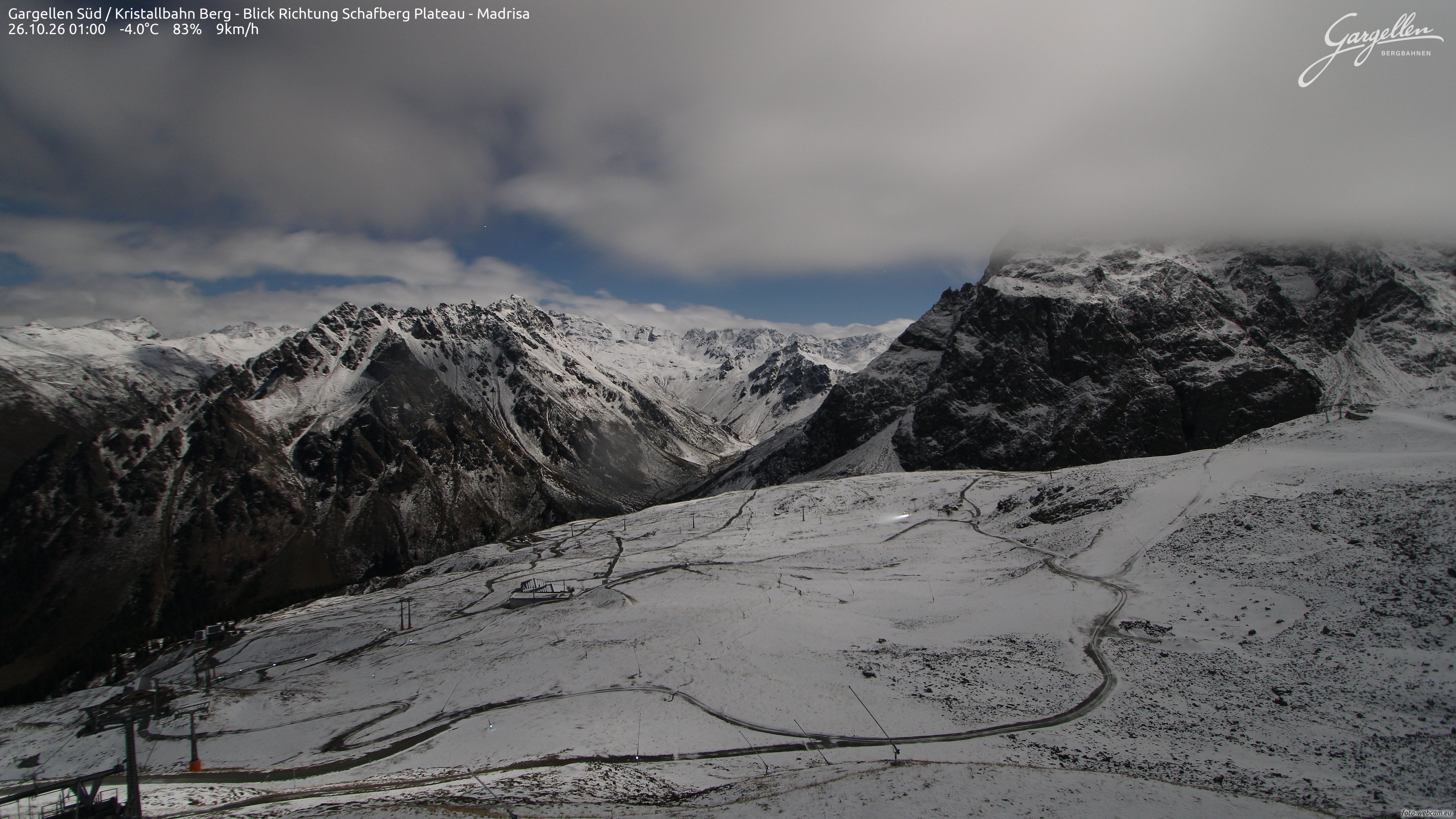
Gargellen is a village in the Montafon, Vorarlberg, in the Austrian Alps. It lies at 1.423 meters, at the end of the road that climbs a side valley from St. Gallenkirch, near the Swiss border. Houses and hotels are clustered beneath the mountains, while the cable car takes you up to the Schafberg, the plateau where a significant portion of the day’s skiing begins.
It’s the highest village in the Montafon and maintains a compact size: there are about 130 inhabitants, restaurants, shops, and accommodations, all accessible on foot. The resort offers 31 kilometers of slopes and eight lifts, up to 2.300 meters, with family-friendly runs and routes for more experienced skiers. The plateau’s blue runs coexist with a red one like Gandasee and Nidla, an off-piste descent that requires a very different level of preparation.
Gargellen is ideal for those who want to spend their holidays in a small mountain village without giving up skiing opportunities. Those looking for ski mountaineering have access to excursions to the peaks and a tour that crosses the border.
Page sections

Discover the best offers for a snow holiday in the best Alpine chalets and huts in the Dolomites, the best facilities immersed in the heart of the Dolomites with typical Alpine style.
The country under the Madrisa
The village is located in a side valley away from the main towns of Montafon. To stay there, you go up the Gargellnerstraße, leaving the main valley floor at St. Gallenkirch. Its location at the head of the valley is also evident in the planning of your holiday: the village’s amenities are close by, while to explore the other towns of Montafon, you’ll need to travel by car or bus.
The Madrisa is the mountain range that dominates part of the landscape and defines the connection with neighboring Switzerland. Touring the mountain is a ski mountaineering itinerary, requiring specific training.
In a town of this size, hotels contribute significantly to the après-ski hours. Restaurants and mountain huts allow you to go out for a meal, but the holiday remains primarily tied to the mountains and snow activities.
Skiing in Gargellen
The slopes of the Schafberg plateau
The Schafbergbahn gondola lift ascends from the village to the Schafberg, reaching the Schafberg Hüsli restaurant area at 2.130 meters. On the plateau, there are blue runs suitable for easier skiing and families; beginners can start in the school area before tackling the higher-altitude descents.
The ski area rises to 2.300 meters, allowing for varied days without having to change ski resorts. Intermediate skiers can choose from runs of varying difficulty and three groomed descents that return to Gargellen: Schwefeltobel, Schnapfenwald, and Birkenegg. Their names are helpful for identifying on the map and choosing the return route best suited to your ability and the day’s openings.
Artificial snowmaking is used on the Schafberg and on the descents to the valley. The plateau is prepared starting with a base of produced snow, which is then supplemented by snowfall; grooming equipment and depth control systems help distribute it. However, not all slopes use the same system: the Täli descent remains on natural snow only.
The 2026/27 season is scheduled from November 27th to April 11th, with lifts open from 8:30 am to 4:00 pm, depending on conditions. The altitude of the town and the slopes provide an indication of the winter environment, but they don’t replace checking the weather forecast. This is especially true for those who book early in the season or want to use the slopes on natural snow.
Täli and the red Gandasee slope
The Täli is notable for its passage through an area devoid of snowmaking equipment and towers along the descent. It remains a groomed run: its more secluded nature doesn’t make it an off-piste route. It’s an option to consider when you want to ski on natural snow and see a different side of the mountain than the plateau.
Gandasee 5a is a red run at the foot of Madrisa, with steep sections. It joins the easier runs on Schafberg and provides a reason to choose Gargellen even for those seeking more than just practice runs. Before attempting it, as with the other runs, check its opening and assess its difficulty based on your skill level.
Variety lies in these differences between the slopes, not in a vast number of kilometers. A family or group of skiers with varying abilities can alternate between shared runs and separate sessions, giving less experienced skiers time to improve. For those who want to ski a wide variety of slopes every day, Gargellen is a more compact option.
Learning to ski and traveling with children
The Schmuggi Luggi Winterland is the Gargellen ski school’s introductory area. It features equipment for learning through play, including a ski carousel and a small cable car. Through playful exercises, children learn their first turns, and then the program continues on the slopes as their progress increases.
The Küken course is designed for children aged 4 and up. Beginners and experienced skiers aged 5 to 14 are welcome; more advanced children meet at the top of the cable car. When booking, it’s helpful to indicate not only the child’s age but also what skills they already have, so we can find the right group and meeting point.
The school offers lunchtime assistance, which must be arranged with the course. This service allows parents to plan part of the day on other slopes, while those who prefer to spend time with their children during break time can choose a different option. Times and availability must be agreed upon when booking.
Even beginners can start at Winterland. Group and private lessons are available, both for learning and for regaining confidence after a period without skiing. Those traveling with experienced friends don’t have to adapt to their slopes right away: an instructor can work on ski control and choose routes for progression.
Snowboard lessons
Beginner snowboarding lessons meet at Winterland, while those for more experienced snowboarders meet at the meeting point at the top. The school’s program features morning lessons for beginners and afternoon lessons for advanced students, as well as the option of booking a private instructor.
Snowboarders use the resort’s slopes and can also contact the school for freeriding. For a mixed group of skiers and snowboarders, the choice of slopes therefore depends primarily on the participants’ ability. Off-piste excursions, however, require specific preparation, even when they begin near the ski lifts.
Nidla and ski mountaineering
Freeride off the groomed slopes
The Nidla is a challenging off-piste descent with about 500 meters of elevation gain. It’s one of the routes that make Gargellen interesting for expert skiers, but it shouldn’t be confused with the Täli or another groomed run: here, you’ll be tackling ungroomed snow, outside the controlled area.
The choice of descent depends on snow, weather, visibility, and avalanche danger. You’ll need an avalanche transceiver, shovel, and probe, as well as self-rescue training and proper off-piste technique. The Gargellen ski school offers guided descents; learning the mountains with qualified professionals is particularly helpful for first-time visitors.
The fact that a trail is known and accessible by ski lifts doesn’t guarantee its passability. Existing tracks or seemingly inviting snow are no substitute for assessing the day’s conditions.
The Madrisa Rundtour and trips to the peaks
The Madrisa Rundtour is a ski mountaineering tour around the Madrisa mountain range, including a stop in Switzerland, sections using lifts, and a trip on the Rhaetian Railway. It includes skinning ascents and off-piste descents and should be planned based on conditions, timing, and connections, preferably with a qualified local mountain guide.
Other destinations include the Vergaldner Schneeberg, a 2.588-meter peak, and the Rotbühelspitze, at 2.853 meters. The itinerary maps indicate approximately 1.155 and 1.428 meters of ascent, respectively: these are outings that require training, not short detours to be included in a normal day on the lifts. Choosing a trip depends on experience and snow conditions, as well as the desire to reach a summit.
Those interested in learning the sport can also consider the guided introductory evening hike offered in Gargellen. It includes a 220-meter climb, a stop for lunch, and the return trip. Reservations are required, and the hike is scheduled. The guide is included in the price, while equipment and the hike are paid separately.
Walks and snowshoes
Walking on the Schafberg
Even non-skiers can take the cable car up to the Schafberg Hüsli restaurant. From there, a winter hike across the plateau begins, approximately 1,5 kilometers long, with a 116-meter ascent and descent, and an approximate time of 45 minutes. The route is short, but of medium difficulty.
The trail is marked with blue winter trail signs and pink posts; there are benches along the way. The view includes the Madrisa and the other peaks surrounding Gargellen. You can dedicate part of the hike to hiking and then stop at the restaurant, checking the trail’s opening times and the time of the last cable car descent.
At altitudes above 2.000 meters, winter shoes and suitable clothing are required, even when the weather in the village seems mild.
The Vergalda hamlet and the Schmalzberg forest
The Vergaldarunde is a winter hike that starts from the cable car area and passes through the hamlet of Vergalda, passing the small chapel before returning to Gargellen. The route is 3,3 kilometers long, with a 167-meter climb and a walking time of about an hour and a quarter; it is classified as medium difficulty.
This is a great way to explore the surrounding area while staying closer to your accommodations than the Schafberg hikes. The return trip passes by the Barga pizzeria, one of the options for a bite to eat. Follow the marked winter trail, taking care near the slopes.
For snowshoeing, the Forstweg Schmalzberg trail is approximately 3,1 kilometers long, with an elevation gain of 113 meters and approximately one hour. It starts in Gargellen and winds along the Suggadin stream towards Borstboden, offering views of the mountains. The difficulty level is medium and the hike is off-trail. It’s important to plan your outing based on avalanche conditions and bring the proper avalanche rescue equipment.
For cross-country skiing, you descend into the main Montafon valley, where there are trails in Galgenul, Gortipohl, and Schruns. To reach them, you can either drive or organize bus travel via St. Gallenkirch, choosing the trail before you set off.
Eating on the mountain and in the village
The Schafberg Hüsli restaurant, at 2.130 meters, has a panoramic terrace overlooking the Rätikon, Verwall, and Silvretta mountain ranges. It can also be reached by cable car, and the building is accessible to all. In the afternoon, guests can enjoy homemade strudel and cakes.
There are other places to eat in the ski area and along the trails, including Kessl-Hütte, Obwaldhütta, and Barga Pizza Hütte. The huts offer soups, hot dishes, and desserts like Kaiserschmarrn, a sweet omelette served in pieces. It’s a good idea to check opening hours before setting out, especially if you’re hiking to the hut.

During the season, the Dr’Schirm restaurant is also open from 10am to 18pm. The choice of places to eat also includes the hotels and restaurants in the town.
Accommodation and well-being
The Bradabella Hotel is run by the Netzer family. It offers rooms for couples and families: the Brunella Suite sleeps 2 to 4 people, while the Family and Friends Suite accommodates groups of 4 to 6. The cuisine features Vorarlberg dishes, with four- or five-course evening menus.
The wellness area features a steam bath, a sauna inspired by the traditional Montafon stube, an infrared cabin, and relaxation areas. Massages can be booked, and private use of the spa is available upon request. This is a great option for those who want to return to the hotel after snow activities and spend time relaxing.
The hotel also offers ski storage near the ski lifts, saving guests the hassle of carrying their gear back to their rooms. For families, in addition to the size of the accommodation, it’s worth considering childcare options and the distance from the ski school meeting point; a couple, on the other hand, might consider the restaurant and wellness area.
How to get to Gargellen
By car, leave the A14 at the Bludenz-Montafon exit and take the L188 to St. Gallenkirch. From there, the Gargellnerstraße climbs up the side valley to Gargellen. This is the last mountainous section of the journey, so be sure to wear winter gear appropriate for the road conditions.
At the lift departure point, there is free daytime parking and seven charging points for electric vehicles. Overnight parking between 10:00 PM and 6:00 AM is not permitted; guests should therefore check with their accommodation provider regarding parking.
By train, reach Bludenz and continue to Schruns; from there, bus line 670 takes you to Gargellen, stopping at the Schafbergbahn. Transfers can also be arranged through your accommodation. When choosing your arrival time, consider your connections and the last connection to the village.
The airports
Airports accessible from Gargellen include Zurich-Kloten, Friedrichshafen, Memmingen, and St. Gallen-Altenrhein. It’s worth comparing your flight with your final transfer to the Montafon: a good train connection or a pre-booked service can impact your trip just as much as your choice of stopover.
Bradabella organizes airport transfers upon request. Those choosing this option must agree on the airport, time, number of people, and equipment transportation. Those who prefer public transportation can arrange to continue via Bludenz and Schruns, completing the final stretch by bus.


There are no comments