







Snow report for Oberstdorf e Kleinwalsertal
Oberstdorf and Kleinwalsertal connect two sides of the Alps: the Bavarian Allgäu in southern Germany and the Austrian Vorarlberg. The ski region encompasses seven mountains and areas, with 130 kilometers of slopes and 48 lifts in total. The variety allows for a range from long runs on the main mountains to learning slopes, choosing a different area each time. Some are accessible by ski, others require a transfer: during a vacation, you can explore the region without having to search for the same type of ski run every morning.
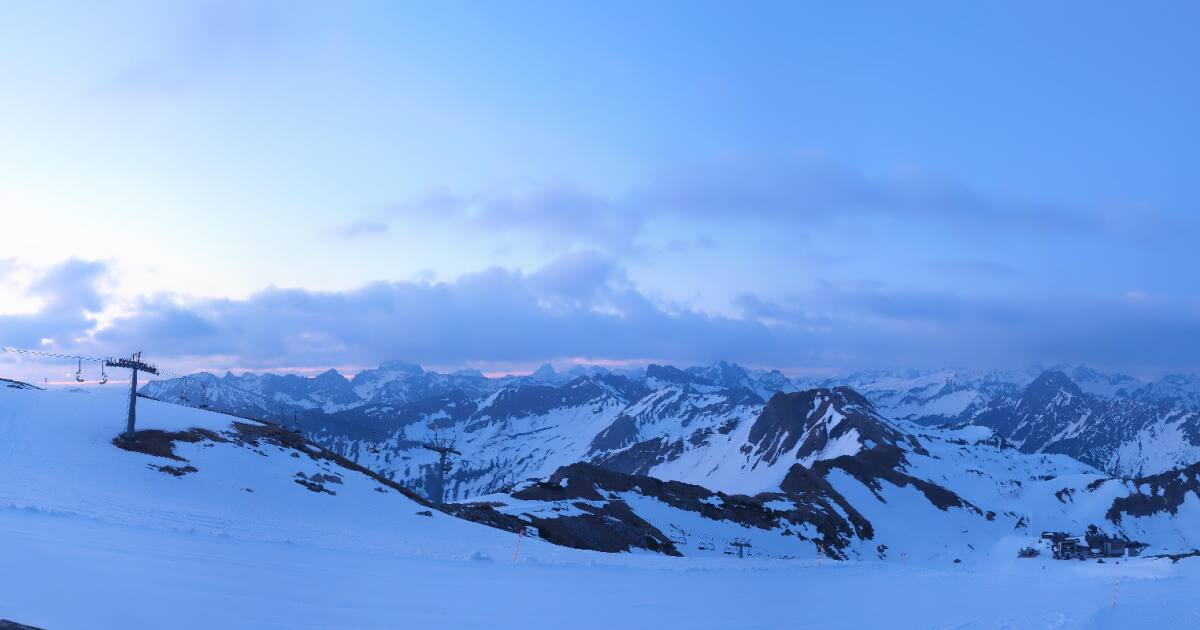
The village of Oberstdorf sits at 813 meters; in the Kleinwalsertal, the route climbs from Riezlern (1.086 meters) to Baad (1.244 meters), passing through Hirschegg and Mittelberg. These are the places to stay, beneath the mountains served by the lifts. Distances and habits vary between the houses and the access points to the slopes: the Kanzelwand cable car, for example, departs from Riezlern, while the Nebelhorn rises above Oberstdorf and takes you to the summit station at 2.224 meters.
The Kleinwalsertal preserves a Walser identity, linked to the settlers who arrived from Switzerland and still recognizable in the local dialect. Riezlern is the largest village in the valley, with shops and restaurants along the main street; Hirschegg, Mittelberg, and Baad complete the series of villages. Life on the slopes revolves around this area, between accommodations, restaurants, and departure points for the mountains, with the option of staying close to a ski area or changing areas during your holiday.
Page sections

Discover the best offers for a snow holiday in the best Alpine chalets and huts in the Dolomites, the best facilities immersed in the heart of the Dolomites with typical Alpine style.
The mountains to ski on
Fellhorn and Kanzelwand, skiing between Germany and Austria
The Fellhorn and Kanzelwand form a connected area of 36 kilometers of slopes, straddling the border. The runs include blue, red, and black runs, spread across both sides. It’s one of the most extensive options for those who want to move between runs throughout the day, with a 5,7-kilometer return on the Fellhorn side. A family-friendly run to Höfle also starts from the Fellhorn II upper station. This way, the day can be divided between the higher slopes and the longer routes, choosing how much to descend before the next ascent.
At the Kanzelwand upper station, you can stop at the panoramic restaurant or at the Hammerspitz, a bar with a terrace overlooking the Kleinwalsertal Valley. A little further down is the Adlerhorst refuge, open year-round.
For the 2026/27 winter, the Fellhorn is undergoing renovation of the Scheidtobelbahn, with the removal of the old Bierenwangbahn and work on the slopes. The new connection of blue slopes called Blaue Ring is part of the project: before planning your ski trip, the updated map and daily opening times allow you to check which routes are actually available.
Nebelhorn, the altitude and the long descent
On the Nebelhorn, a ten-passenger gondola lift takes you to the Höfatsblick area, while another lift continues to the summit. The 7,5-kilometer descent to the valley floor is a must-try option for those who enjoy long runs, where the skiing continues well beyond the upper slopes. A new six-seater Koblat chairlift, with a bubble and heated seats, is also planned for winter 2026/27.
Höfatsblick is located at 1.932 meters, Seealpe at 1.280. The lower sections of the return journey include black runs, so length must be considered along with difficulty: reaching the upper section by lift does not mean having an easy descent back to the village.
Heuberg, Walmendingerhorn and Ifen
In the Kleinwalsertal, skiing on the Heuberg remains close to the villages, with over 20 kilometers of slopes and numerous descents suitable for families and beginners. The system of lifts and connections allows you to move along the valley all the way to the Walmendingerhorn cable car station. Between runs, there are mountain huts and restaurants serving traditional cuisine, sweets, and simple dishes: you can spend the day in this area without having to immediately head for the higher altitudes. To reach Ifen, however, you need to change transport: the shuttle departs from the upper station of the Parsennbahn and takes you to the base of the cable car.
The Walmendingerhorn can be reached from Mittelberg and offers 15 kilometers of slopes. At the upper station, the Gipfelstuba restaurant and the Hora Bar are adjacent to a panoramic viewpoint accessible by elevator.
The new Walmendingerhorn cable car is under reconstruction in 2026: it is scheduled to reopen on December 24th. Those departing at the beginning of winter should therefore check the calendar before choosing this mountain as their daily ski destination.
At Ifen, the two ten-passenger Ifen I and Ifen II gondola lifts serve approximately 25 kilometers of slopes. The landscape is dominated by the Gottesacker karst plateau, distinct from the slopes near the villages. At the upper station is Tafel&Zunder, a winter restaurant specializing in organic and local products. Below the Auenhütte refuge, the Herzsee reservoir supplies the area’s snowmaking facilities.
Söllereck and the learning areas
Söllereck offers 14 kilometers of slopes; over half of the runs are blue. The gondola lift takes you to around 1.400 meters, making it a particularly attractive mountain for beginners or those looking to consolidate their technique on accessible slopes. In Söllis Winterwelt, the beginners’ area, magic carpets help you practice your first steps; then you can move on to the Wannenköpflelift. The areas are designed for adults learning, not just children.
At the base of Ifen, near the Gaisbühl lift, Burmis Winterwelt has a magic carpet and a beginner’s ski lift. The Sport Pauli rental shop and the Alpin Lodge Auenhütte are also located nearby. The valley also boasts introductory lifts close to the villages, such as the Kesslerlift in Riezlern and the Jedermannlift in Mittelberg. Choosing a lesson location can be a good idea, especially for children who are just starting out.
For ski, snowboard, and cross-country lessons, the NTC school offers individual courses, children’s programs, and family lessons. Rental and storage facilities are located at the Nebelhorn and Fellhorn lift stations. This allows you to pick up your equipment at the base and store it in the evening, avoiding the hassle of carrying it back to your accommodations after each day. Family courses are available to be arranged with the school based on participants’ abilities, while individual lessons allow for specific needs to be addressed.
Snowboarding, jumps and snow trails
On the Fellhorn, the Crystal Slope is a playful 840-meter course, at about 1.750 meters, featuring waves, tunnels, and banked turns. The Crystal Peak, below the Schlappoldsee station, offers easy and intermediate jumps; at the base of the Kanzelwand, the Crystal Ground is dedicated to jibbing, with slide structures and a layout that changes throughout the season. At Söllereck, the Mini Park adds small jumps, boxes, and waves for beginners to freestyle.
Cross-country skiing in Oberstdorf
Oberstdorf hosted the Nordic World Ski Championships in 1987, 2005, and 2021; cross-country skiing is one of the reasons to choose this resort even if you don’t want to dedicate your entire vacation to alpine skiing. The network boasts 71 kilometers of classic-style trails, 67 of which can also be prepared for skating. Many routes are connected and cross different parts of the region, from the areas near the town to the side valleys; the slopes can be very wide on the uphill and downhill sections.
At the Nordic Center Oberstdorf/Allgäu, you can ski on World Cup slopes, with over thirty variations: some require training, such as the route that tackles the Burgstall climb. Ten kilometers in the core of the network can rely on artificial snow. For a more leisurely ski, there’s the Otterrohr, a loop on the edge of town with mountain views. The snow report allows you to choose from those prepared for the dates of your stay, distinguishing between classic and skating.
Winter walks and views for non-skiers
Around Oberstdorf, there are approximately 140 kilometers of groomed winter hiking trails. The network includes valley walks and higher routes, reaching altitudes of up to 2.000 meters. You can choose between an outing near the village or a cable car ride up to the mountains.
At the Nebelhorn, you can ascend to the summit from Höfatsblick via the Gipfelbahn, the final lift. The Nordwandsteig is a 100-meter-long panoramic walkway that offers views of the mountain’s northern face. From Höfatsblick, the winter hike to Zeigersattel begins behind the Edmund Probst Haus hut: another option for spending time outdoors, with a refuge and refreshments nearby.
The Ifen II cable car station is the starting point for the winter hiking trail on the Gottesacker, at around 2.000 meters. The entire route is five kilometers long, with a shorter three-kilometer variant. Snowshoe hikes on the Ifen are subject to a specific requirement: transporting equipment on the lifts is permitted only when accompanied by guides from local mountain schools. Therefore, the prepared hike and the snowshoe excursion are two activities that must be organized differently.
At Seealpe, on the Nebelhorn, the NTC park offers rafting, snow biking, and airboarding, with instructors demonstrating how to use the equipment. It’s ideal for families, couples, and groups who want to have fun in the snow without taking a ski lesson. Winter clothing and suitable footwear are required; equipment is provided on site.
In the villages of Kleinwalsertal, you can ice skate in Riezlern or go sledding in Mittelberg, next to the church, where a moving walkway takes you up the slopes. With Husky2go, families can also participate in guided dog sled rides: children up to ten years old sit on the sled, while their parents help pull with a harness. It’s an active experience for adults, so choose according to your role during the outing.
Ski mountaineering in the Kleinwalsertal and evenings at Söllereck
The Kleinwalsertal mountain schools organize ski mountaineering, freeride, and splitboarding excursions and courses. Options range from a first in-depth look at the necessary off-piste techniques to an excursion for those with experience. Guides select the itinerary based on snow and conditions, including protected areas. Off-piste travel requires adequate skills and avalanche self-rescue equipment; the program should be agreed upon, detailing your experience, even if you ski well on groomed slopes.
There’s a separate option for skinning up to Söllereck in the evening: for the 2026/27 winter season, appointments are scheduled for Thursdays from January 7th to February 25th, from 6:00 PM to 10:00 PM. The ascent follows the main piste towards the Berghaus am Söller, the refuge at about 1.400 meters. The Schrattenwang, Ochsenhöfle, and Höllwies runs are also closed on these evenings; after 10:00 PM, the main piste closes again.
The living room, the Allgäu kitchen and the swimming pools
In Oberstdorf, inns and restaurants offer Allgäu cuisine alongside international dishes. For a simple lunch, choose a Brotzeit, a traditional savory snack, while other restaurants serve game and regional specialties. Cheeses, cured meats, and honey can also be purchased directly from the producers; cafés are a great place to stop for a slice of cake while spending time in the village.
For families, the Hotel Viktoria is located in Rubi, about two kilometers from Oberstdorf. It offers family rooms and apartments in its facilities, play areas for different ages, and a soft play area for children up to twelve years old. It’s a great place to stay if you’re looking for indoor spaces where your little ones can continue playing after returning from the mountains, while staying outside the town center.
Those who prefer to sleep on the mountain can choose the Berghaus am Söller, just above the Söllereck upper station. The rooms have private bathrooms, and the stay includes breakfast and dinner; the restaurant serves Allgäu specialties. The location allows you to start the day directly in the ski area, offering a different experience than staying in a hotel in the village and its nightlife.
For wellness, Therme Oberstdorf offers a 25-meter swimming pool, a pool with water games, and a heated outdoor pool accessible from inside. Children have a shallow pool with a small slide; the sauna area is reserved for those aged sixteen and over. Children under six have free access to the bathing area. Therefore, the pool is also a great family activity, while the sauna has different access conditions. Before booking a very early stay, please consider the scheduled maintenance from November 16 to 22, 2026.
Getting to Oberstdorf and the Kleinwalsertal
The Kleinwalsertal belongs to Austria, but road access runs from Germany through Oberstdorf. By car, the area is reached via the A7 motorway and the B19. Train travelers arrive at Oberstdorf station and continue by bus to the villages in the valley. The Walserbus is included for guests with a Walserbus pass within the Kleinwalsertal; the section from Oberstdorf has different fares and must be considered separately.
Airports
Airports to consider include Memmingen, Friedrichshafen, Munich, and Stuttgart in Germany, Zurich and St. Gallen-Altenrhein in Switzerland, and Innsbruck in Austria. Your choice depends on the available flight and the ground transportation you intend to arrange to Oberstdorf and your accommodation.


There are no comments