







Romme Alpin is a ski resort in southern Dalarna, Sweden, about 13 kilometers outside the town of Borlänge. Founded in 1987, it combines facilities, a ski school, restaurants, rental shops, and a hotel under a single management.
The slopes follow the contours of the mountains, and groups of trees have been preserved between the runs-a choice made since the ski resort opened to provide variety. The woods thus accompany the descents in the heights of central Sweden.
Page sections
Slopes and lifts between Solklinten and Snöberget
The resort boasts 34 runs spread across the two peaks, facing in all directions, with a maximum vertical drop of 275 meters. There are 14 lifts, including 6 fast six-seater chairlifts, 2 drag lifts, and 6 platter lifts. Three moving walkways in the start area are also included, but these are not included in the total. The longest run is 3.000 meters. The resort has a snowmaking system, and all runs are groomed every night.

Discover the best offers for a snow holiday in the best Alpine chalets and huts in the Dolomites, the best facilities immersed in the heart of the Dolomites with typical Alpine style.
For the 2026/27 winter season, the opening hours are scheduled from December 19th to April 4th. Slopes and lifts will operate from 9:00 am to 3:00 pm until January 20th, and from 9:00 am to 4:00 pm from January 21st onwards. The opening hours of individual slopes depend on the snow and daily conditions.
The black slopes of Solklinten and the descents of Snöberget
The Solklinten massif hosts the resort’s black runs: Götes Brant, Lenas Svarta, Brömses, Sydhanget, and Hällas Hang are all black. Åkes Dröm, on the other hand, varies in character along the way, with a blue upper section and a black lower section; Solstinget is black at the top and green at the base.
The Snöberget is the relief of easy and long descents: here are the green ones, such as Gruvvägen, Hemvägen and Dalvägen, and the blue ones, such as Utsikten and Farmors; Bo’s is red.
Three descents from Snöberget provide a measure of this length. Gruvvägen, “the mine route,” extends for 2.100 meters and passes by Flintgruvan, an old mine that operated in the early 20th century: its name comes from there. Hemvägen, “the home route,” descends from the summit of Snöberget to Wärdshuset, the rest stop near the parking lots, for 2.700 meters, with some gentle sections. The longest descent, the 3.000-meter run listed in the ski area’s data, isn’t a single run: from the summit of Snöberget, you take Farmors, the blue route, and continue on Dalvägen, the green route, to Romme Dal.
Sandins, opened in 2025, is a passage that bypasses the first steepest section of Hemvägen, designed for those descending from the summit for the first time.
Learning to Romme Dal: From the Carpets to the Top
The introductory area is located in Romme Dal, the base of the resort, next to the entrance to the Ski Lodge hotel. The slope is gentle, the platter lifts are short and slow, and the slopes are lined with tunnels, tricks, and small jumps for learning through play. Three moving walkways, two 30-meter long and one 90-meter long, ascend at the snow’s edge. They are ideal for younger skiers or those who aren’t yet comfortable with the platter, and can be used with or without poles. Next to the area is a barbecue area and the sledding slope, which is only available during the day: it’s the only part of the resort where sledding is permitted.
To use just the three magic carpets, you don’t need to book a ski pass; the platter lifts in the introduction area, however, do require one. The resort’s general rule applies here: ski passes are purchased or topped up online before skiing and are not sold on-site. The pass is loaded onto a rechargeable Axess card. Children aged 0 to 6, who ski for free, also need a reserved ski pass and a card, which costs a small fee if you don’t already have one. For a family, this means organizing everything before leaving, including the little ones’ passes.
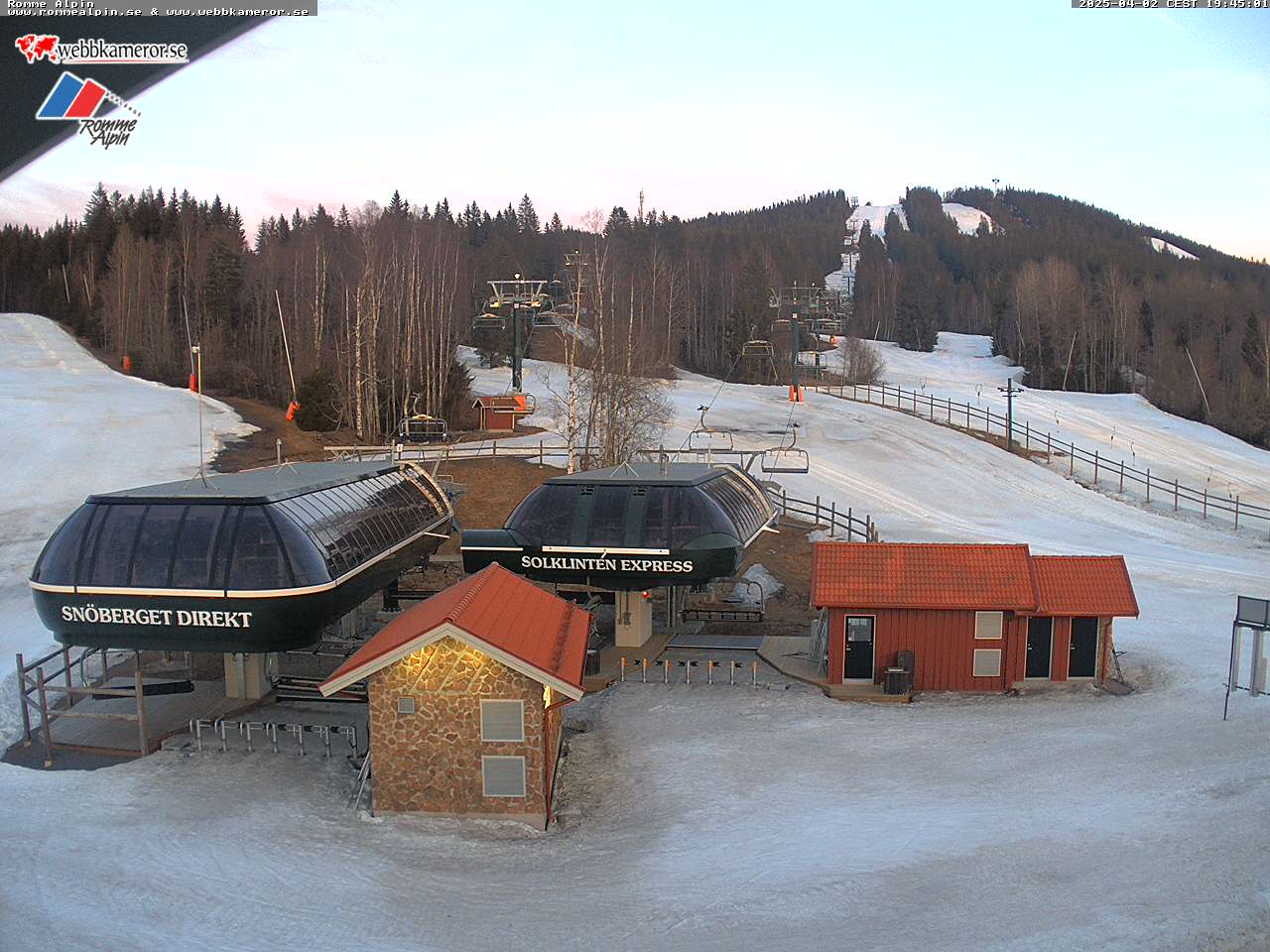
The next stop is the Långa Knappliften, “the long plate”: from its top, long, easy descents lead to Romme Dal, perfect for practicing turns and speed. Once you’re already comfortable skiing the beginner slopes, the resort offers a trip to the peaks: to Solklinten with the Solklinten Express chairlift or the Tvillingarna drag lift, and to Snöberget with the Snöberget Direkt chairlift, where the gentler runs are more numerous.
The resort’s school offers group and private lessons in alpine skiing, snowboarding, and telemark skiing for various ages and levels. Children are welcome from age 3 onwards; for the youngest, there’s Skidlek, or “skiing game,” with a maximum of four participants per group. From ages 4 to 9, groups are divided by age and skill level, from beginners’ stops and first turns to those who are already confident on the red slopes and are taken on ski tours throughout the resort. Children must be able to remain separated from their parents for the entire lesson.
For adults, there is a beginner’s course for ages 16 and up, with no experience required: in 85 minutes, you’ll become familiar with the equipment, balance, sliding, stopping, turning, and climbing back up with the plate.
The school also includes an adapted skiing section, with both sit- and stand-up skis. The biski features a seat on two skis, while the sitski features a seat on just one. Seat size and backrest height are chosen with the individual, based on their support needs. Lessons with an instructor start at 2 hours. To rent a biski or sitski independently, a companion certificate is required, which is obtained after a 3-hour course: a requirement to be aware of before booking your stay with this option.
The school also offers Rommis Våffelkalas, the “waffle party” of Rommi, the resort’s penguin mascot. Children aged 4 to 9 accompany their instructors up to Våffelstugan, the refreshment point at the top of Snöberget, eat waffles, and ski back down; parents are not invited. This isn’t an activity for beginners: they must already know how to snowplough, turn independently, and ride the chairlift.
Juniorpark and Rommiland on Snöberget
At Romme Nord, on Snöberget, two Junior Parks, served by the Nord Express chairlift, welcome skiers and snowboarders of varying levels. The easy park occupies the lower, green section of the Calles Kurvor run, whose upper section is blue: large parabolic turns and small boxes and rails, the features you slide on skis or a snowboard. The blue park is located on the green Mattas Gröna run and offers larger jumps and more challenging boxes and rails, without reaching the dimensions of a pro park. The parks’ colors indicate the difficulty of the features, not that of the slope they are located on.
Rommiland, in the lower section of the Utsikten slope on Snöberget Nord, is a small play area with tunnels, small jumps, and turns for younger children and those with little experience. It can be reached by skiing, like the rest of the mountain: it is not a caretaker’s area nor accessible to non-skiers.
Anyone between the ages of 10 and 15 who is already comfortable skiing throughout the area can take 85-minute ski lessons in the park, with a maximum of 5 participants.
Sleeping at the base: Ski Lodge, Holgers Hus and Annas Hus
The Romme Alpin Ski Lodge is the base hotel. Rooms range from 2 to 6 beds, with breakfast included in the price, and guests have access to a ski storage room with direct access from the snow. Some double rooms have a private sauna, as do the mini-suites for 4, and the large suite, which also sleeps 4. Families can also find space in the rooms for 4, 5, and 6.
For larger groups, the resort offers two external houses. Holgers Hus sleeps 12 in four rooms, with a full kitchen, 900 meters from the ski area; Annas Hus sleeps up to 10 people, 750 meters away, and is pet-friendly. These are distances you’ll need to cover each morning, not ski-in. In the hotel, you’ll live to the rhythm of the resort, with breakfast served at the hotel and ski storage accessible directly from the slopes; in the houses, you can cook and organize your day independently.
Eating on the hills and dinner at the top after sunset
Both peaks have refreshment points: the Toppstugan on Solklinten and the Våffelstugan on Snöberget.
On the Solklinten is the Toppstugan, “the hut at the top”: a room with a fireplace and a terrace. At lunchtime, the restaurant serves meat, fish, and vegetarian dishes, while the cafeteria offers soups, sandwiches, desserts, and drinks for those who prefer a shorter break.
On Snöberget stands the Våffelstugan, “the waffle hut.” The dough and jams for the sweet waffles are made on-site; there are savory versions with salmon, game, or vegetables, and for those who prefer something different, there are goulash and sandwiches. The large terrace faces southwest and offers a sweeping view; on sunny days, the waffles are made right outside.
At the base, the Lodgerestaurangen inside the Ski Lodge serves lunch, and the hotel bar, with its fireplace, is the perfect spot for a coffee or hot chocolate in the afternoon, along with a selection of light dishes. Those bringing their own lunch can enjoy the Värmestugan, the warming room: two levels where you can eat your own food, along with changing rooms, restrooms, kiosks, and a paid cloakroom for valuables. There are no microwaves, but the staff will help warm up the children’s food.
In the evening, the Toppstugan changes function. On dates when the fondue dinner is held, guests are transported to the summit by tracked vehicles after sunset, when only snowcats operate on the mountain. The fondue is beef fillet, with salmon or tofu as alternatives, to be specified when booking, and there are special options for children. After the lifts close, the area becomes a work zone: the ascent for dinner is by organized transport, while independent access on foot or skis is not permitted. Organized transport makes the fondue one of the few resort experiences open to non-skiers as well.
Skates, sauna and time without skiing
In Romme Dal, non-skiers will find a small ice skating rink, with skates available for hire at the resort for those who haven’t brought their own.
For those staying at the Ski Lodge, the program continues after the lifts close: a games room that opens when the chairlifts stop, film screenings, creative activities, ping pong and billiards, as well as treasure hunts and encounters with Rommi the penguin. Some activities require reservations or have a fee, and the weekly program can be found at reception. The relaxation area is always reserved for hotel guests: separate saunas for men and women, a bar, seating areas, a small gym, and massages. A massage therapist is available on select days, and sessions can be booked in advance or directly at reception.
When planning a stay for non-skiers, it’s important to consider the rules regarding access to the slopes and lifts. Skiers are not allowed to ascend the slopes on foot, with snowshoes, cross-country skis, or ski touring skis and skins: the descents are one-way for safety reasons. Ski lifts are not accessible without downhill gear, which means that those accompanying them alone are not allowed to take the chairlift, even for lunch at Toppstugan.
Cross-country skiing and winter hiking in the Borlänge area
Near Borlänge, there are areas dedicated to cross-country skiing and winter hiking, accessible by a short drive from the ski resort. The Bergebo center, near Borlänge, offers 1,5 to 15-kilometer trails through rolling woodland, a 6-kilometer illuminated trail, a café, showers, and a sauna.
Gyllbergen, the municipality’s largest nature reserve, lies at an altitude of approximately 500 meters, about 20 kilometers southwest of Borlänge. From December to March, cross-country ski trails are established when conditions permit; the area remains untouched, and the trails are not groomed daily. When the municipality prepares them, there are pedestrian routes on the compacted snow by snowmobile to the Norra Dragsjön and Lång-Älgsjön lakes, separate from the cross-country trails, which should not be used. When the snow thaws, the compacted snow can’t hold up, and if it refreezes, it becomes slippery: this is an excursion that should be decided based on the previous days’ weather forecast. One access point is Gyllfäbodarna: the road is cleared up to the parking lot, which has a heated rest area, shelters, fire pits, and basic amenities, but no kitchen: food is brought from home.
For a rainy day, head to Aqua Nova, the water park at the Maserhallen amusement center in Borlänge: three slides, a wave pool, an artificial rapids, a hot tub with bubbles, and a toddler area with a pirate ship and 28-centimeter-deep water. The 3G Turbo and Black Hole slides require a minimum height of 120 centimeters; younger children can go down the Magic Eye accompanied by an adult.
Arriving from abroad: Stockholm Arlanda, Borlänge and the final stretch
The main airport for those arriving from abroad is Stockholm Arlanda. Arlanda Central train station is located in SkyCity, the central area of the airport between Terminals 4 and 5, and is served by long-distance trains, so you don’t need to enter the city to catch a train to Dalarna. From there, the SJ train connection takes you to Borlänge in about 2 hours; this approximate time should be checked on the timetable for your travel date.
The train arrives at Borlänge C, the city’s central station. For the final stretch, take a taxi or a bus from Dalatrafik, the regional transport company, towards Koppslahyttan/Romme Alpin. Check the days and times before your trip. Those arriving by car will find approximately 2.500 free parking spaces at the station, along with 80 spaces with paid charging points.
Ski buses operate from cities in central Sweden, including Stockholm, Uppsala, and Västerås, offering a day package that includes a return ticket and a ski pass; those who already have a ticket can purchase transportation only. The journey from Stockholm, departing from the city, takes about 2 hours. Ski buses are therefore also an option for those who want to include a day on the snow in a stay in the capital.


There are no comments