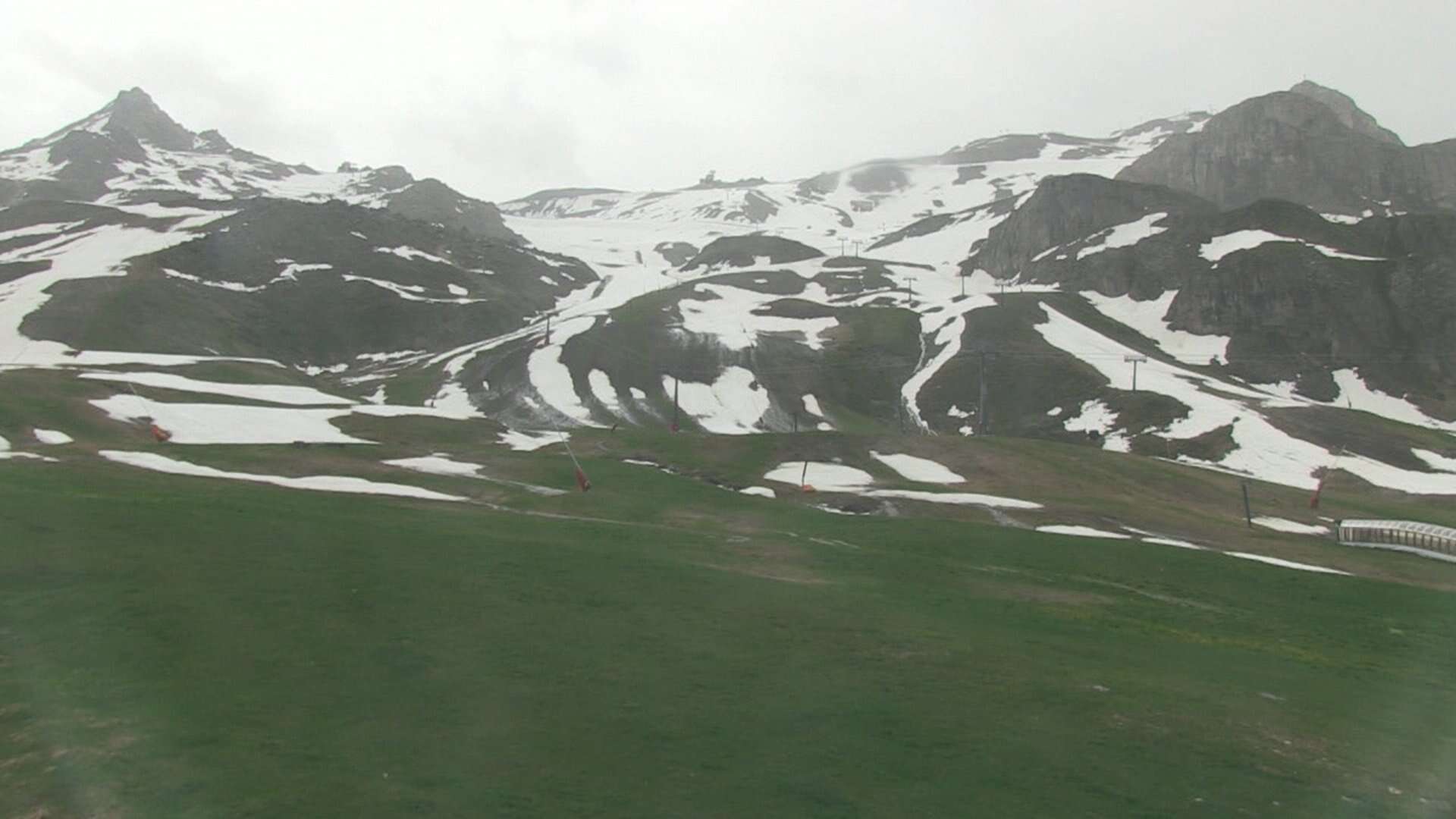







Ischgl is located in Austria’s western Tyrol, in the Paznaun Valley, at an altitude of 1.377 meters. The town is one of the gateways to the Silvretta Arena, the ski area that crosses the border to the Swiss village of Samnaun. Above the valley’s hotels and houses lies a vast ski area, with slopes reaching 2.872 meters, allowing you to change slopes, views, and villages without taking off your skis.
It’s a perfect choice for a holiday where skiing takes up a good portion of the day and the evening doesn’t end when you return to the hotel. Après-ski, concerts, and restaurants are part of its identity, but next to the clubs are also the Silvretta Therme swimming pools and the winter trails that follow the valley towards Mathon.
Page sections
From the village cable cars to the slopes of the Silvretta Arena
Three major lifts depart from the town. The Silvrettabahn and Fimbabahn gondolas reach Idalp, the broad plateau around 2.320 meters, home to restaurants, schools, and numerous ski lifts. The Pardatschgratbahn 3S gondola lift takes you to the crest of the Pardatschgrat, at approximately 2.620 meters. The access routes are different, but once at the top, you enter the same ski area.

Discover the best offers for a snow holiday in the best Alpine chalets and huts in the Dolomites, the best facilities immersed in the heart of the Dolomites with typical Alpine style.
The Silvretta Arena comprises 239 kilometers of slopes and 46 lifts. The red runs play a key role, alongside blue runs and black runs for expert skiers; the combination allows for both a varied day of skiing and a holiday with ever-changing slopes to try. The return runs to Ischgl require more attention than the easy slopes at higher altitudes: run No. 1, which returns to the village from the Idalp area, is red. Those still taking lessons can take the gondola down.
The black ones of the Greitspitz and the Lange Wand
The Greitspitz is one of the mountains where the most challenging skiing takes place. The Lange Wand chairlift ascends to approximately 2.850 meters and serves several black runs, including run 14a with a maximum gradient of 70%. It’s a descent for those already confident on steep slopes, quite different from the introductory runs around Idalp.
The lifts alternate between high-capacity chairlifts, gondolas, and surface lifts in the learning areas. Artificial snowmaking complements natural snow, while the slopes’ distribution across multiple slopes offers variety throughout the day. The 2026/27 season is scheduled from November 26th to May 2nd, with the actual availability of slopes and lifts dependent on conditions.
Among the new features for the 2026/27 winter season is the new Höllkarbahn, an 8-seater chairlift with a weather dome and heated seats, scheduled to open in November. It replaces the previous lift on the same line, which runs from the Höllboden plateau at 2.141 meters to 2.468 meters, with a journey time of about five minutes. The Höllboden and Sassgalun chairlifts, also 8-seater, were renovated in 2025. The Höllboden upper station has been moved just above Idalp, between runs 10 and 11, to improve skier flow in that area.
The Smugglers’ Tour, a ski tour between two countries
The Smuggler’s Trail, or Smugglers’ Tour, takes its name from the ancient border crossings between Ischgl and Samnaun. Today, it’s a ski tour on slopes and lifts, with three variants: Gold, Silver, and Bronze. Gold is the most challenging, Silver is for experienced skiers, and Bronze focuses on blue runs. These are not ski touring routes with skins.
The Gold circuit covers a total of 61,8 kilometers; the 13.740 meters of elevation gain include lift access and are not all skied downhill. The tour takes you to the Swiss side and then back to Ischgl, with numerous mountaintop rest stops. To complete it, you need to start early and keep in mind the lift schedules: you cross the border on skis, but the return journey depends on which lifts are still open.
Learn to ski at Idalp and stay with children
Idalp is the place to start your first lessons. Here you’ll find introductory ski lifts, conveyor belts, and blue runs; the Sonnenbahn chairlift serves easy slopes and is equipped with automatic safety bars. This means you’ll learn at altitude, within the ski area, with the option of returning to town by gondola once your day on the slopes is over.
The Ischgl Ski School offers lessons for children, teens, and adults, both individually and in groups, and also teaches snowboarding. For children ages 3 to 5, there’s the Ski Kindergarten, a small-group course that combines play and exercise at the Idalp Kinderland. You can choose morning, afternoon, or full-day courses, from Sunday to Friday; with the full-day option, you can add supervised lunch, including food and drinks. Ski passes and equipment are collected separately from the lesson. The meeting point is near the arrival stations of the Silvrettabahn and Fimbabahn lifts, so allow time for the ascent from the village.
Group ski lessons are available for ages 6 to 15, while the New Generation program is dedicated to kids ages 12 to 15. Group snowboard lessons also begin at age 6; private lessons are available for individual technique development.
The ski-free daycare is a separate service, also at Idalp, near the restaurant entrance. It operates Sunday through Friday from 10:00 a.m. to 3:30 p.m., with hourly, half-day, or full-day reservations. It does not accommodate children in diapers.
For families, options include ice skating, hiking, and swimming. Hotels and apartments are scattered throughout the village and its hamlets: those who want to frequently reach lessons at Idalp can choose accommodations with access to the cable cars, while accommodations in Mathon offer a connection to Ischgl.
Snowpark, freeride and ski mountaineering
The Ischgl Snow Park is located in the Idalp area. It has two freestyle areas, a funline, a bag jump with a cushion landing, and a speed line. At the end of the park is the Park Base, a space where you can rest between runs.
Piz Val Gronda, the mountain reached by the eponymous cable car at approximately 2.812 meters, is a key freeride destination. Off-piste slopes open up toward the Fimbatal Valley. Even near the lifts, skiing is off the resort’s controlled trails, in an environment exposed to avalanche risk. Local guides organize outings and courses; avalanche bulletin assessment, self-rescue equipment, and the ability to use it are required.
For ski mountaineering, the Paznaun also offers multi-day excursions. The Heidelberger Hütte, a refuge in the Fimbatal, is one of the bases for crossings; other departure points are located in the Galtür area, further up the valley. These trips must be organized with a guide, depending on the preparation, snow conditions, and the opening of the refuges, and are separate from the ski tours on the slopes of the Silvretta Arena.
The Paznaun without Alpine skis
The winter hike between Ischgl and Mathon follows the valley floor for much of the way. It starts from the Silvretta parking lot, passes through the hamlet of Paznaun, and continues along a mostly flat path. Beyond Mathon, you reach the wildlife park. It’s a great way to get away from the town’s busiest streets without hitting the slopes. Those looking for a more challenging hike can take the trail toward Mutta: from the Silvretta Therme spa, the trail climbs through the forest and offers a view of Ischgl from above.
In the opposite direction, toward the valley exit, the winter trail to Ebene starts at the spa, crosses the Madleinbach stream, and passes through the hamlets of Versahl, Vergröß, and Platt. It’s an easy trail, about 3,7 kilometers long, with a 32-meter ascent and a 110-meter descent. Once you reach Ebene, you can return by bus or retrace your steps. Along these hikes, the hamlets’ houses and the river remain close by, while snowshoe excursions accompanied by local guides allow you to explore other snowy trails, with equipment available for rent.
Cross-country skiing has a network of approximately 80 kilometers in the Ischgl and Galtür regions, with classic and skating trails and several access points. To explore the trails in Galtür, continue further up the valley. Schools also offer lessons for those wanting to try cross-country skiing for the first time; snowshoeing excursions can be booked with a guide as part of the winter activities program.
Near the village, the Ischgl Loipe is an easy 5-kilometer trail that follows the Trisanna stream to Rossboden and returns without any major climbs. The central start and floodlighting until 9:30 pm allow cross-country skiing even after an afternoon spent in the village. Those looking to extend their skiing can follow the connection to the Mathon trail, following the Paznaun cross-country ski network.
Evening sledding from Idalp
The sledding run descends 7 kilometers from the Silvrettabahn mountain station, at approximately 2.320 meters, down to the valley, with a 950-meter elevation change. It is illuminated and opens on select evenings, but remains closed during the day. The ascent is via cable car, and sleds are available for rental; the descent requires careful attention to speed along the entire route.
Après-ski, restaurants and Silvretta Therme
Après-ski is one of the reasons many choose Ischgl. Bars like Kuhstall and Trofana Alm are part of the village’s life and extend the afternoon after the lifts close. Top of the Mountain concerts mark key moments of the season, while those seeking a quieter dinner will find restaurants and a culinary offering that goes beyond a quick bite between runs. The events calendar also plays a role in choosing dates: a vacation during a major concert has a different atmosphere than a week without any major events.
Dinners in the village and hotels with spas
Tyrolean cuisine graces the most sophisticated dining tables: among the specialties worth sampling are Kaspressknödel, flattened cheese dumplings, and Käsespätzle, cheese dumplings. In Ischgl, however, a dinner can also be a reason to choose a hotel or stay a few more nights. At Stüva, the restaurant at the Yscla hotel on Dorfstraße, chef Benjamin Parth offers French-inspired cuisine, with tasting menus and à la carte selections. The Celerina wine cellar, managed by sommelier Sarah Parth, emphasizes Austrian wines and also includes international labels.
The Schlossherrnstube, inside the Schlosshotel, features a dining room inspired by Tyrolean stube, with traditional furnishings and a tiled stove. Patrick Raaß is in charge of the kitchen, and winter service focuses on dinner, from Friday to Tuesday. These are two addresses for those seeking an evening at the table in the village, far from the hustle and bustle of the après-ski bars.
The Schlosshotel is located directly on the slopes and offers rooms and suites, as well as the Schloss Spa. The wellness area features an indoor pool, Finnish sauna, herbal sauna, aromatic steam bath, and Kneipp path. The hotel thus allows guests to combine proximity to the slopes with a return to the pool, while also maintaining the restaurants in the same building for evening dining.
Pools and saunas at the Silvretta Therme
The Silvretta Therme offers another option, even for a whole afternoon without skiing. The complex boasts over 1.000 square meters of water, including a sports pool, a recreational pool, a whirlpool area, and an outdoor rooftop pool. These are complemented by bookable saunas and treatments; in the winter, there’s also an ice-skating rink.
The sauna area occupies approximately 1.500 square meters and includes panoramic rooms, a herbal sauna, and a steam bath. The program includes guided infusions; for those seeking a private space, a Private Spa with sauna, steam bath, and infrared cabin can be booked. Treatments and massages are included in the pools, while the gym is a separate space for workouts. The Trattoria and Grill Lounge are accessible without a spa ticket, offering a chance to stop for lunch in the complex without using the water area.
Airports and arrival in Ischgl
The nearest airport is Innsbruck. By public transport, take bus F to the main station, then continue by train to Landeck-Zams and from there take bus 260 to Paznaun, which also stops in Ischgl. This route allows you to get there without renting a car; for a direct transfer from the airport, taxis and pre-booked services are available.
Munich, Zurich, Memmingen, Friedrichshafen, and Salzburg are other options, worth considering along with your next trip. For those traveling by train, Landeck-Zams remains the reference station: Ischgl does not have its own train station. Once you arrive, buses connect the valley’s towns; therefore, it’s best to distinguish between accommodations in the village and those in a hamlet, especially if you plan to walk to one of the three main cable cars.