









Jackson Hole is located in northwest Wyoming, USA, in a valley of the Rocky Mountains between the Teton Range and the Gros Ventre Mountains. The slopes of the Tetons are home to the ski area that made its name famous among skiers; on the valley floor, meanwhile, you’ll find a western-style town, protected areas where animals spend the winter, and snow trails at the foot of the mountains. It’s this closeness between skiing and nature that gives substance to a trip here, even when one member of the same family seeks challenging descents and another prefers snowshoeing or a visit to the museum.
The valley’s main town is Jackson, centered around Town Square, a plaza with arches of elk antlers. Teton Village, about 19 miles northwest of Jackson, is the base of Jackson Hole Mountain Resort, often abbreviated to JHMR. Staying here means being close to the lifts, schools, and rental shops. Jackson offers a more urban feel, with galleries, shops, and restaurants connected by characteristic wooden walkways: to ski at the resort, you’ll have to travel further.
The valley also includes other resorts. Snow King Mountain is the ski area on the mountain immediately above Jackson; Grand Targhee is located on the western slope of the Tetons, also in Wyoming but accessible from Jackson via Idaho. They are separate resorts, each with its own slopes and lifts. For Jackson Hole Mountain Resort, Teton Village combines the lift departures and ski school services.
Page sections

Discover the best offers for a snow holiday in the best Alpine chalets and huts in the Dolomites, the best facilities immersed in the heart of the Dolomites with typical Alpine style.
Teton Village Mountain and the first descents
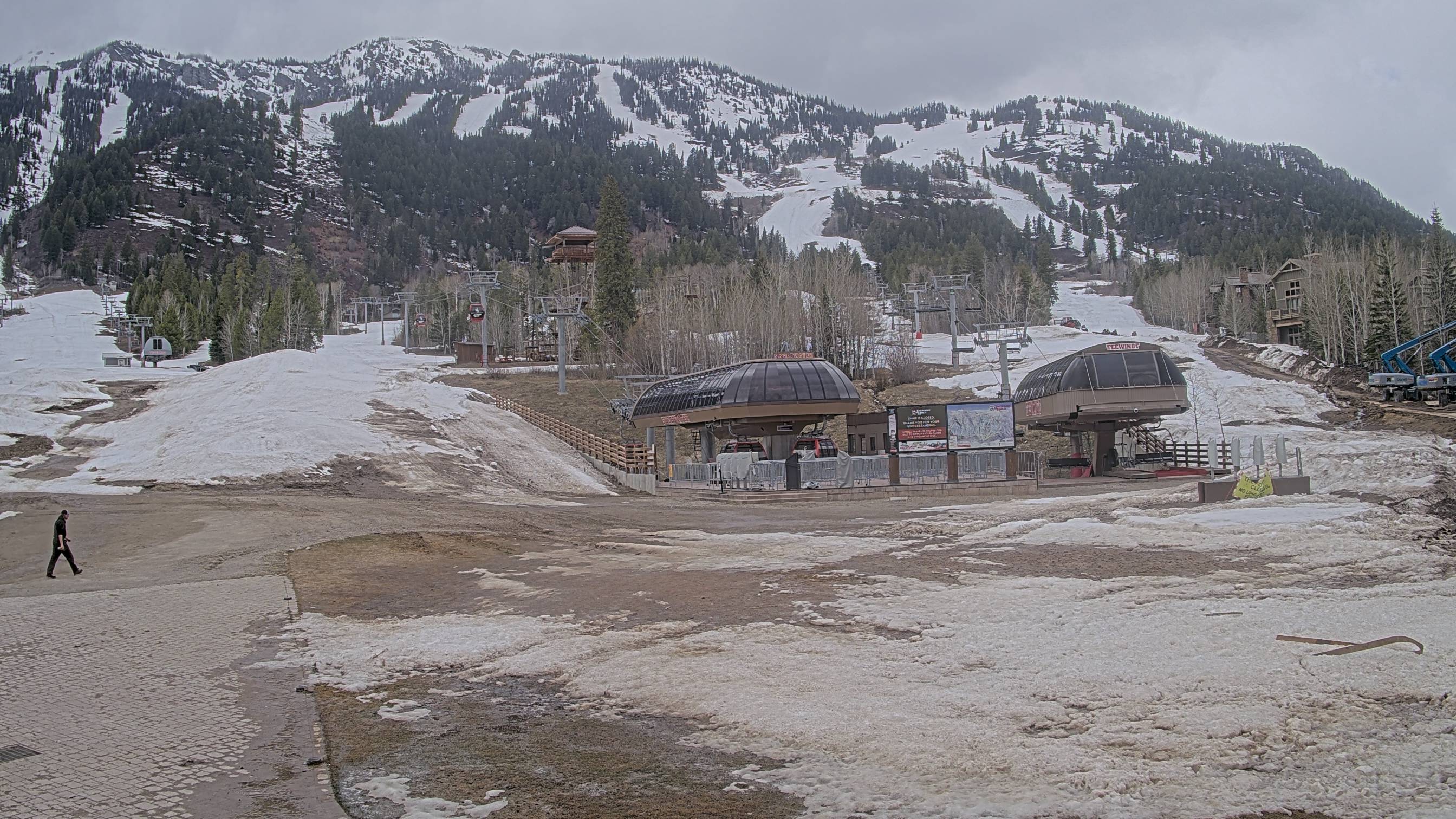
Jackson Hole Mountain Resort occupies the slopes of Après Vous and Rendezvous Mountains, with a base of 1.924 m and a lift-served high point of 3.185 m: approximately 1.260 m of elevation gain. The resort’s grounds cover 2.500 acres, just over 1.000 hectares, and include 131 trails, along with ungroomed slopes.
Ten percent of the skiable surface is suitable for beginners, 40% for intermediate skiers, and 50% for experts. These proportions are useful for understanding the mountain’s character, and should be read using American signage: a green circle for the easiest runs, a blue square for those of intermediate difficulty, a black diamond, and a double black diamond for the most challenging runs. These symbols rank the difficulty within Jackson Hole: the blue square should be evaluated here, not compared to known runs in other American or Alpine resorts.
For beginners, the lower area has its own spaces and facilities. Eagle’s Rest is a wide, gentle run, served by the chairlift of the same name; Pooh Bear is located near the middle stop of the Sweetwater gondola. Lower Teewinot is the longest green run in the area.
Ski school, children and adult beginners
Solitude Station is the center for lessons, rentals, and food at the first stop of the Sweetwater gondola, about a two-minute ride from the base. Group lessons for beginners and intermediate adults are available here, for both skiing and snowboarding, with a maximum of four participants.
For children, the program changes with age. The Pioneers programs, for children ages 3-4, and the Rough Riders programs, for children ages 5-7, are located at the Kids Ranch in the Cody House building at the base; the Explorers, for children ages 8-14, meet at Solitude Station. The school offers skiing and snowboarding as part of its programs for younger children, with participation requirements to be checked at the time of booking: Pioneers must be at least 3 years old and be able to use the bathroom independently. Those traveling with even younger children can consider the individual childcare service, available for children aged 5 to 36 months and subject to availability.
Signing up for a lesson doesn’t automatically include access to the lifts or equipment. These purchases need to be coordinated, especially during peak periods. Parents who go up to Solitude Station simply to drop off their children or assist them in regular shoes don’t need a ski pass for this lift: a practical detail for families where not everyone skis.
From the intermediate slopes to the Rendezvous
Once you’ve gained some independence, the areas served by the Casper and Teton chairlifts offer groomed blue runs where you can extend your day. The Sweetwater gondola allows you to reach intermediate runs from the base; at the Casper chairlift, Easy Does It is a blue run for those who transcend the easier runs. These parts of the mountain offer space to gain confidence with steeper slopes and longer runs, choosing runs based on your ability and the current snow conditions.
The change in scale is felt with the Aerial Tram, the large red gondola known as Big Red. In about nine minutes, it takes you from Teton Village to the summit of Rendezvous, overcoming almost the entire elevation gain in the area. From up there, the view opens onto the Teton Range and the valley. The gondola also welcomes non-skiers, with a winter panoramic ticket and weather-dependent service; you can then board and return by gondola. At the summit, Corbet’s Cabin is the small café known for its waffles, a welcome stop for those accompanying skiers.
From the cable car’s arrival point, there’s no easy descent back down to the valley: starting from Rendezvous on skis requires familiarity with challenging slopes. This is where you encounter the more technical side of Jackson Hole, with steep slopes and ungroomed bowls, where reading the terrain is as important as turning ability.
Corbet’s Couloir is the iconic gully of this mountain. Its challenging entrance and reputation for skiing and snowboarding competitions are part of the resort’s sporting history; tackling it requires expert skill and the right conditions. From the cable car, you can observe it during the scenic ascent.
Snowboarding on slopes, parks, and natural slopes
Snowboarding has a well-established presence in Jackson Hole, from beginner lessons to freeride. There are distinct areas for beginners to freestyle: the Little Stash, near the Antelope Flats run, offers small wooden features and banked turns; the Antelope Flats terrain park is designed for first jumps and rails. Bronco Park, near the Teewinot chairlift, offers intermediate-level facilities. The configuration of features changes throughout the season and should be read carefully via the on-site signage.
Part of the mountain’s appeal for expert snowboarders lies in its natural features. Dick’s Ditch is a long groove reminiscent of a natural halfpipe. The Casper Bowl is a freeride destination for experts, with gullies and rock jumps, reached by a short hike.
Ungroomed snow and backcountry: boundaries to know
For expert skiers, the resort’s guides organize outings on the slopes of the Bridger-Teton National Forest and also offer excursions in the Teton Pass area. Familiarity with ungroomed black runs is required: introductory backcountry courses are aimed at those who already know how to ski off-piste and want to learn how to navigate the environment outside the resort. Park-authorized guides also operate ski touring in Grand Teton National Park.
In American mountains, an ungroomed slope may be located within the resort. In Jackson Hole, within the resort boundaries, the patrol’s work includes assessing avalanche danger and taking action to reduce it before the affected areas open. Signs, closures, and daily restrictions remain in effect; management does not eliminate all risks, as the resort itself specifies.
Crossing an exit gate means entering another world. The outside backcountry doesn’t have the usual JHMR patrol services. The proximity of a cable car or the tracks left by others doesn’t make that environment equivalent to the slopes open inside the resort. Adequate skills, snow-related training, self-rescue equipment, and up-to-date assessments of conditions are required.
Skinning trips are organized outside the resort. Skiing alone is prohibited on the JHMR slopes: access to the ski area is via the lifts.
Cross-country skiing and snowshoeing at the foot of the Tetons
Cross-country skiing allows you to explore the valley floor at a different pace than the lifts. The Teton Pines Nordic Center, in Wilson, offers lessons for beginners and more experienced skiers, both classic and skate style, along with equipment rental. It’s a solid foundation for those who want to try cross-country skiing during their vacation or refresh their skills before embarking on a longer outing. The valley offers trails managed by different providers; it’s best to choose based on the trail’s condition and the snow-grooming report.
In Grand Teton National Park, the Teton Park Road changes function during the winter. The section between Taggart Lake Trailhead and Signal Mountain Lodge is closed to vehicles from November 1st to April 30th and becomes a space for cross-country skiing, snowshoeing, and snowshoeing. The affected section measures approximately 22,5 miles; grooming for classic and skate skiing is concentrated approximately between mid-December and mid-March, depending on snow conditions and weather. The route follows the foothills of the Tetons, allowing you to limit the distance to your own energy level, without having to cover the entire route.
Off the groomed road, winter trails aren’t necessarily marked, and you need to know your way around. For snowshoeing, you can choose excursions with park-authorized operators, including Jackson Hole EcoTour Adventures. This allows you to entrust the route to a guide and pay more attention to the landscape. Those hiking or snowshoeing must avoid damaging the tracks; before setting out, check access, conditions, and closures to protect wildlife.
Sledding among the elk and playing in the snow
The National Elk Refuge, north of Jackson, welcomes elk that come down from higher elevations to spend the winter. Horse-drawn sleigh rides typically run from mid-December to early April, allowing you to observe and photograph them in the refuge. The service schedule depends on seasonal conditions.
Bighorn sheep, trumpeter swans, and bald eagles can also be observed at the refuge. Sighting opportunities vary, and some areas and trails close in winter to avoid disturbing the animals when they need to conserve energy. The sleigh ride is organized; it does not allow free roaming in the protected areas.
For a more active afternoon, Snow King Mountain offers King Tubes: rafting along groomed lanes, with a moving walkway for the return journey. The minimum height requirement is approximately 107 cm (42 inches), and each tube holds only one person; so this isn’t an activity to be done while holding a child. In Teton Village, the Commons area adds ice skating and a snow castle, with availability depending on the season. These activities are close to the village facilities, also useful when the kids still want to play after class.
Jackson, the evening and days without implants
A visit to the National Museum of Wildlife Art, about 4 miles north of downtown, takes you from observing animals to depicting them in art. The museum is located on the slope overlooking the National Elk Refuge and houses over 5.000 works dedicated to wildlife, including works by Georgia O’Keeffe and Andy Warhol. It also includes an interactive children’s gallery, expanding the possibilities for family visits on days away from the slopes.
For après-ski in Teton Village, the Mangy Moose is a go-to at the resort’s base: the saloon offers live music and casual cuisine, perfect for stopping for a burger. In Jackson, the Silver Dollar Bar at the Wort Hotel gets its name from the silver coins embedded in the bar; next door is the Silver Dollar Grill, the hotel’s restaurant. The bar and entertainment area is geared toward adults: after 18 p.m., entry to the bar is restricted to those 21 and older.
Spas and hot springs
Among the hotels in Teton Village, the Teton Mountain Lodge is home to SpaTerre and features indoor and outdoor pools. The spa area is reserved for those 18 and older; for non-hotel guests, access to its facilities requires a treatment reservation, not a simple day pass.
South of Jackson, near Hoback Junction, Astoria Hot Springs offers another experience: outdoor pools along the Snake River, open year-round. The complex includes four hot tubs with mineral water, a treated children’s pool, and a cold plunge pool. The different temperatures of the pools allow you to choose how you want to spend your time. Admission is organized by session, and reservations are recommended. For those who want to combine skiing with an outdoor hot tub, this is a trip worth planning, also considering travel outside the city.
When to leave and how to organize your travels
For the 2026-2027 winter, Jackson Hole Mountain Resort has announced its opening on November 27, 2026. Actual availability of slopes and lifts depends on conditions. During the winter, January is generally the coldest month, while March brings more sunshine and longer days. Therefore, choosing the right season also depends on children’s tolerance for the cold and the planned off-slope activities. Snow conditions at high altitudes and in the valley can vary significantly.
The resort limits the availability of day passes. Booking accommodation without considering lift access can complicate your plan, especially when lessons are also required on specific days. For the 2026-2027 season, reservations are also required for Ikon Pass and Mountain Collective holders.
START public transportation operates between Jackson and Teton Village: travel within the town is free, while travel to the village is subject to a fee. Some hotels have their own shuttles. This combination makes it possible to consider a car-free stay when focusing on the town center and resort; for Grand Teton National Park, however, you’ll need to organize a vehicle or a hike with transfers. The Moose-Wilson Road does not provide a continuous winter road connection between Teton Village and Moose, as a section of it is closed to traffic: the route should be planned based on seasonal traffic, not summer traffic.
Airports for Jackson Hole
The closest airport is Jackson Hole Airport, JAC, in the valley and within Grand Teton National Park. From Europe, you’ll need a connecting flight in the United States, such as Denver or Salt Lake City: JAC does not receive international flights. Under normal conditions, the transfer to Jackson takes about 20 minutes; Teton Village is further away.
Idaho Falls and Salt Lake City airports are alternatives with road transfers of approximately 1 hour and 45 minutes and 4 hours and 30 minutes, respectively, to Jackson. These times are approximate: snow, ice, and mountain pass conditions can lengthen the journey. When choosing your flight, consider this stretch and the time it takes to return to the airport.


There are no comments