







Speikboden is located in South Tyrol, in northeastern Italy, in the Aurina Valley holiday region. It’s a mountain best explored for its wide slopes, offering panoramic views of the surrounding peaks, but it also offers opportunities to spend a day on the snow without actually skiing. The ski area boasts 43,5 kilometers of slopes and 8 lifts, with a significant difference in altitude between the upper slopes and the valley floor: an attractive choice for those who enjoy long runs, in addition to skiing on the high-altitude slopes.
Below the mountain are Campo Tures, at 865 meters, and Lutago, at 970. The cable car departs between the two villages, in Costa di Tures, and provides access to the ski area above 2.000 meters. You can stay in the valley, among the village amenities, and ascend each morning; those traveling with children will find the first snow activities right next to the valley station. The highest point reached by the lifts is Sonnklar, at 2.400 meters, while the summit of Speikboden reaches 2.517 meters.
Page sections
Slopes, views and the long descent to the valley
The blue Alm-Express and Tottomandl runs offer access to the more accessible slopes in the upper section; the Seenock area has red runs and a black run, while Sonnklar offers two black runs. Lifts include the Speikboden and Alm-Express gondolas, four chairlifts, and two moving walkways. The names of the lifts also help you find your way around the map: Seenock, Glück, Sonnklar, and Tottomandl are the chairlifts serving the different areas.

Discover the best offers for a snow holiday in the best Alpine chalets and huts in the Dolomites, the best facilities immersed in the heart of the Dolomites with typical Alpine style.
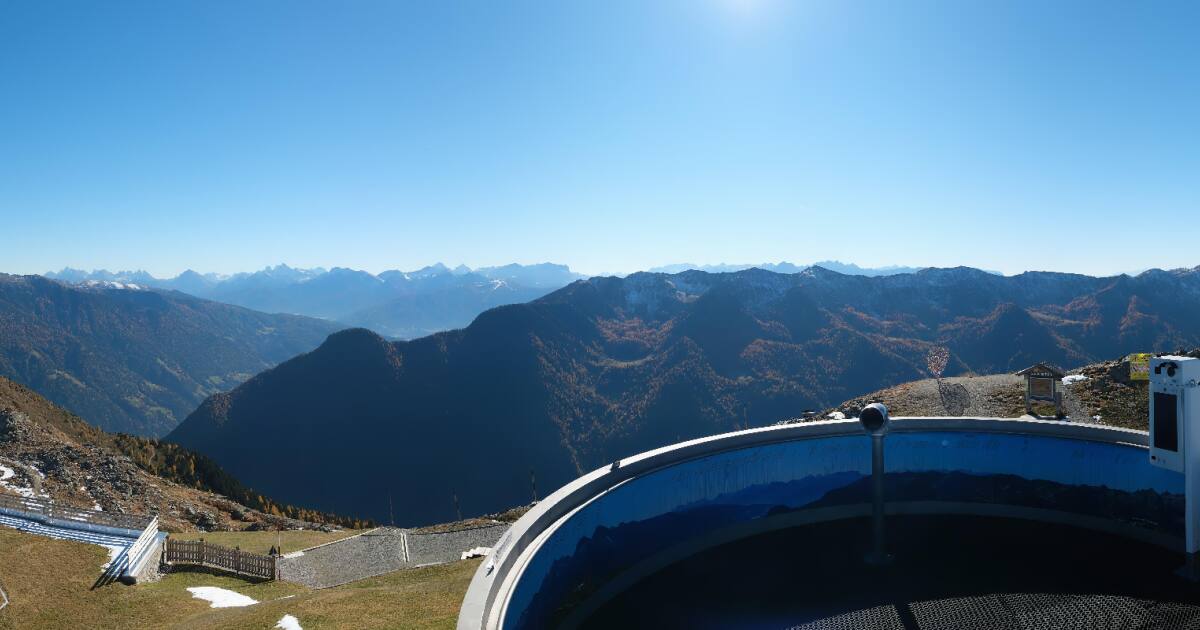
From Sonnklar, one of the best descents begins once you’re familiar with the more challenging runs. The combination of the black 5a, the red 3c, and the Michl return run reaches the base at 950 meters: nearly 9 kilometers of skiing and approximately 1.500 meters of elevation gain. Above, the view encompasses the Dolomites, the mountains of the Aurina Valley, and the Durreck Group; lower down, the Michl continues through alpine meadows and Swiss pine forests. The length is thus accompanied by a change in landscape, from the open slopes of the upper section to the trees along the return. Skiing the entire run requires mastery of the various sections and the ability to tackle the initial black run.
The Skiworld Ahrntal ski pass also includes the valley’s other areas, for a total of 86 kilometers spread across distinct ski areas. Those wishing to change mountains during their vacation can organize a transfer. Artificial snow is available alongside natural snow in the Skiworld area. The 2026/27 winter season is scheduled from December 4th to April 4th; actual opening times and connections should be checked in the bulletin, especially at the end of the season.
Families and introduction to skiing
The Family Funpark is next to the valley station, a convenient location for those accompanying children who are just starting out without wanting to immediately head up the mountain. Two moving walkways, 120 and 70 meters long, serve two easy slopes; you can also play in the snow and use sleds and bobsleighs. The moving walkways are available for a fee. At the top station, at 2.000 meters, the Michlpark offers a snow play area with free admission: another option worth considering when your family spends the day in the upper part of the resort.
For the little ones, the school organizes a Mini Club, aimed at children aged 3.5 to 6. The meeting point and the room are located at the valley station: the program runs from 9:00 am to 3:30 pm and includes lunch. They can also participate in a 1.5-hour group ski lesson in the Family Park, using the moving walkway to ascend. This service allows parents to choose a package with childcare and activities, rather than a single lesson. Regular attendance is from Sunday to Friday, and the program is also open on Saturdays during the Christmas and New Year’s holidays.
Children and teenagers aged 7 to 15 have the Junior Club, which takes place at altitude. The group meets in front of the school office, at the mountain station at 2.000 meters, and spends five hours together: four hours are dedicated to skiing, while the break includes lunch and supervision. Groups have a maximum of ten participants. For families with children of different ages, it’s helpful to distinguish these two meeting points when booking, as the younger ones’ program starts in the valley and the older ones directly at the ski area.
Even adults can dedicate part of their vacation to learning, without having to immediately follow friends who have been skiing for years. The school offers courses for beginners and advanced skiers aged 16 and over, with three hours of lessons in groups of up to ten people. A minimum number of participants is required for the course to begin; if this number is not reached, the duration or price may change. Therefore, the level should be agreed upon along with the package, especially if you have only a few days and want to work on a specific skill level.
Private lessons allow us to organize an individual program for children aged 3 and up, from beginners to advanced. Bookings are made through the school, specifying your experience and goals, so we can choose a lesson suited to your abilities.
Snowboarding and snowparks
For snowboarders, group snowboarding lessons begin at age 7 and are open to beginners and advanced students. They last three hours, meeting at the mountain station: initial lessons or advanced lessons are held at the top of Speikboden. Ski passes and equipment are purchased separately. This is a detail to consider before arrival, along with the lesson time, so you can have the equipment ready and join the group without wasting time with the instructor.
The Speikboden Snowpark is located at the top of the Seenock chairlift and offers an Easy Line and a Fun Line. The park is rated Easy and features elements that change with the season: it’s a great place for those who want to add freestyle to their skiing. Before entering, you can check out the course and the obstacles available, choosing those that are compatible with your technique.
On the snow without downhill skis
To see the mountain from above without skiing, there’s the winter hike to Dosso Sonnklar. You’ll ascend by cable car and chairlift to 2.400 meters; from the Sonnklarhütte refuge, the trail reaches the panoramic ridge. It’s about 500 meters, with a 10-meter ascent and descent, and takes approximately half an hour. It’s a short hike, but at high altitude: the choice depends on snow conditions and the opening of the trail and lifts. Crampons are available for rent at the chairlift arrival point.
The cable car also provides access to the snowshoe trails, shown on the Speikboden winter map. Equipment can be rented at the mountain station before setting off. To choose your route, you’ll need up-to-date information on opening times, snow conditions, and avalanche danger; just because you arrive by cable car doesn’t automatically mean every nearby trail is passable.
A different kind of descent is the sled ride from the top station to the church in Lutago: about 10 kilometers to the village. The final destination is Lutago, not the cable car parking lot. To return to the starting point, you can take the ski bus or the sled taxi; it’s a good idea to organize this return trip before the ascent, especially if you’re traveling with children and have your car parked at the bottom station.
The Rio Bianco valley and mountain hut
For a day of cross-country skiing, head to Rio Bianco, a village at 1.300 meters above sea level, separated from the Alpine ski area. The cross-country ski trail is 10 kilometers long and has a 110-meter elevation gain. Access is from the Sportbar, where rentals are also available, depending on their opening hours. Trail availability depends on grooming and snow conditions.
Rio Bianco also features the Busegge mountain hut, accessible in winter via a prepared trail or cross-country ski run. It’s a destination for both hikers and cross-country skiers: traditional meals and snacks are served inside, while the terrace overlooks the village. For those who want to spend a few hours away from the ski lifts, the walk and stop at the mountain hut allow you to explore another side of the valley.
Freeride and ski mountaineering with accompaniment
The Speikboden ski school offers guided five-hour ski mountaineering and freeriding excursions for groups of one to three. Safe descents on black runs are required: the program covers skinning, off-piste descents, and the use of avalanche transceivers, shovels, probes, and avalanche rescue equipment. Trips are organized upon request, with the program tailored to the weather and snow conditions. Those who wish to focus solely on downhill skiing can book private freeriding lessons, on skis or snowboard, lasting at least two hours and for a maximum of three participants.
When skinning up independently, there’s a specific rule to keep in mind: touring skis are not permitted on the Speikboden ski and sledding slopes. Skiworld’s dedicated evening openings apply to the Klausberg ski area; they do not allow access to the Speikboden slopes after closing time.
Where to stop in the mountains
The Sonnklarhütte refuge, accessible by the Speikboden cable car and the Sonnklar chairlift, offers a scenic stop at the top of the mountain. The rooms feature rustic furnishings, and the terrace offers a scenic lunch overlooking the peaks when the weather permits. The restaurant serves South Tyrolean specialties alongside international dishes; game dishes are also featured. It’s a must-visit spot both for skiing and for hiking up to the summit.
Along the red slope back down, you’ll find Mitte Hitte, the bar and restaurant run by the Niederkofler family since the late 1970s. Its name recalls the old middle station of the ski lifts, and its location between the mountain and the valley makes it a popular stop on the way down. The cuisine features traditional South Tyrolean recipes, and in winter, hot dishes are served until 3:00 PM. Those wishing to stop for lunch should plan for this time before the last run.
For a night in the snow, there’s a special option: the MountainIgloo, located at about 2.000 meters. The experience includes dinner and a night in a sleeping bag inside the igloo, along with the option to use the sauna and spa. This stay should be booked directly with the organizer, checking the package and available dates. It’s especially popular with those who want to dedicate part of their vacation to an experience other than a hotel room, staying on the mountain even after a day of skiing.
Campo Tures, between castle and wellness
Choosing accommodation in Campo Tures allows you to combine skiing with village life, dominated by the medieval Taufers Castle. It’s a recognizable presence in the valley landscape and a worthwhile visit for those who want to learn about the area’s history beyond its slopes.
The castle preserves over twenty furnished rooms: from the library to the guest rooms, from the Knights’ Hall to the Armory, encountering the functions and objects of a grand historic residence. The chapel features frescoes by Friedrich Pacher. In winter, guided tours are available, with a schedule to check for your stay; it’s worth scheduling your visit before arriving, rather than counting on free access at any time.
For those seeking wellness, the Feldmilla Design Hotel in Campo Tures offers a heated indoor and outdoor pool, saunas, and two hot tubs. You can choose to stay in the hotel or request access to the Day Spa, which is also available to non-residents upon request and subject to availability. The hotel also offers bathrobe, towel, and slippers rentals, to be arranged at the time of entry. A dinner option is also available: the ToccoRosso restaurant offers South Tyrolean cuisine with Mediterranean influences. This option allows you to organize a poolside break without changing your accommodations, provided you book the access and desired services with the hotel.
How to get to Speikboden
By car, leave the A22 motorway at the Bressanone/Val Pusteria exit, reach Brunico, and continue towards the Aurina Valley. For those traveling by train, the closest stations are Brunico and Brunico Nord, from which you can continue by bus, taxi, or a pre-booked shuttle to the village and your accommodation. The final connection depends on the location of your accommodation: it’s best to arrange this before departure, along with luggage and equipment transportation.
Airports
Bolzano and Innsbruck are the airports to consider for reaching the area; Verona, Venice, and Munich offer other options depending on available flights. From the airport, you’ll need to continue by road or organize a combination of public transportation with transfers to the valley.


There are no comments